

"Mountainhead" Inconsistently Skewers Our Tech Overlords
The new Max movie is still worth thinking through and experiencing, if you can put up with overlord-behavior


I took a look yesterday at the list of annual Bilderberg attendees, and laughed.
It reminded me that back in my younger days, plenty of people believed that this group had world-dominating, conspiratorial aspirations.
Maybe they do. If so, my vision of their meetup resembles the farcical last act of Jesse Armstrong’s Mountainhead, his new movie streaming on the Max platform.
It must be mentioned that Armstrong created and showran the HBO Max show Succession, which blistered a corporate media family that resembled common, outside perceptions of the Fox-News world. Four seasons of that show featured a family of four, three siblings and a dad, vying for power over a major media network, often conspiring against each other and then re-conspiring in different configurations.
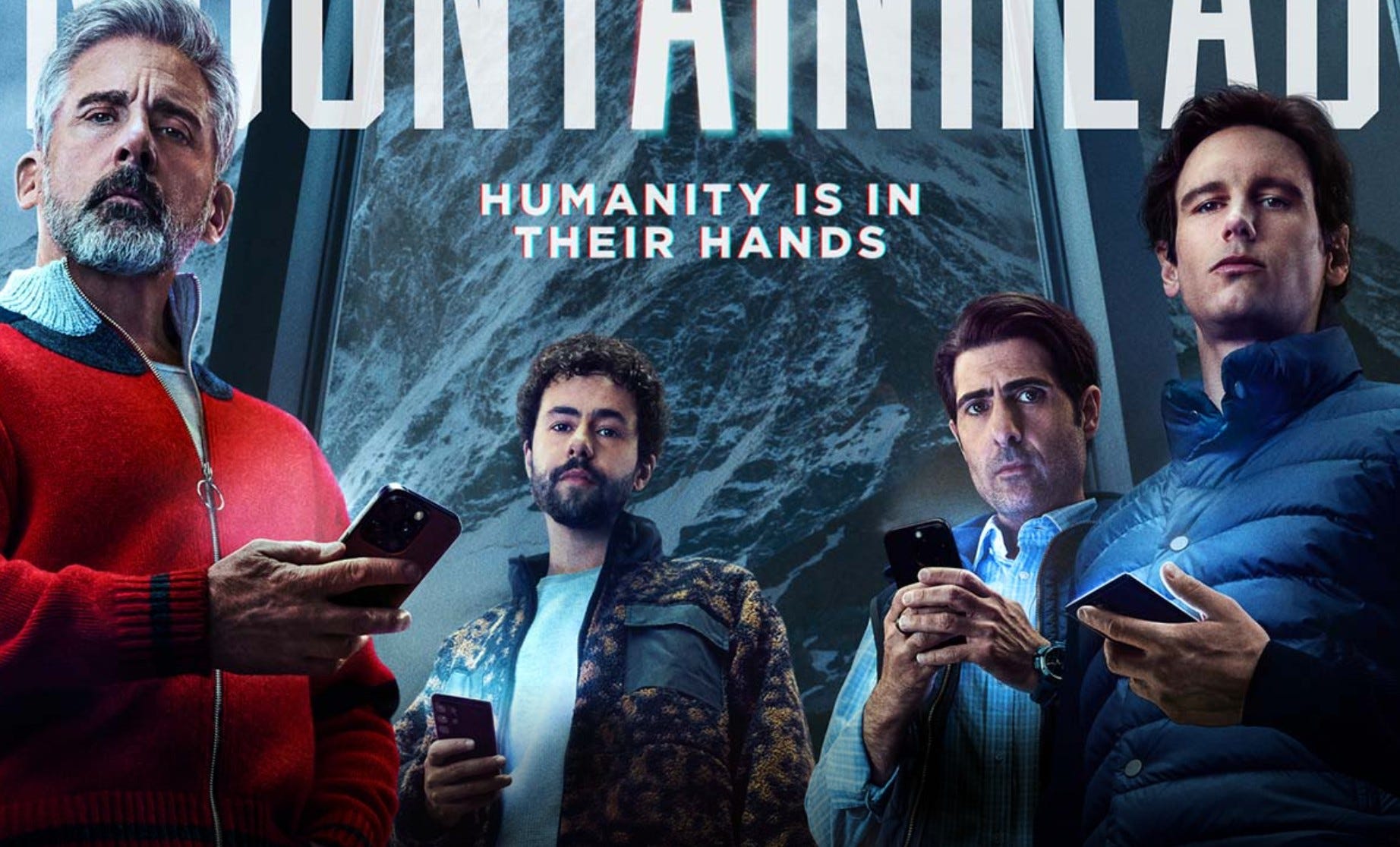
Such goes Mountainhead. The single locale movie, set in a remote Utah mountain mansion, depicts four tech gurus meeting up for a bro-fest, their regularly personal and business getaway. This they call “the Brewsters,” not far phonetically from the Bilderbergers, but also an exact match for “Brewster’s Millions,” the novel and ‘80s film where a guy has to spend all of a portion of his inheritance in a limited time to get all of his inheritance.
The four tech bros, ala Armstrong’s way of depicting such types, are fundamentally schemers. As founders of important apps and software, three are billionaires, with one having “only” $531 million, two orders of magnitude less than the other three — a deficit he will of course stew over. Two of them, maybe all of them, seem to be familiar enough with philosophy and history to pass any university class.
But also they are amoral. While they’re celebrating their getaway by writing their current wealth on their chests and howling at the mountain range, the rest of the world descends into political chaos thanks to the latest Deepfake AI technology that one of them has just released.
Mountainhead’s greatest concern is skewering perceptions of Silicon Valley types, as Succession already did in its final season. A lot of its criticism is from the Left, errantly in my view, since tech companies and founders are massive donors to both political parties in the US, and especially the Democrats. One wishes that Armstrong would follow the money more than he has done here.
The “mountainhead” of the title is called out as a likeness to Fountainhead, Ayn Rand’s novel, and the gurus all would wreck the current global order and build a new one with themselves in charge, if they could.
This all seems rather serious in the movie’s first two acts. While the world burns around them, displayed on TV screens and their phones, the four gurus — played by Steve Carell, Jason Schwartzman, Cory Michael Smith, and Ramy Youssef — playfully mock it while planning possible coups and international takeovers.
Smith’s character mouths transhumanist ideals while believing that “nothing means anything, and everything’s funny.” Carell’s is dying of an unknown disease, but that doesn’t stop him from plotting a new human order where his consciousness can be uploaded, or any other breakthrough method that will help him avoid dying.
They’re the two richest characters, though Youssef’s character’s wealth is on the rise. He’s the one guru with a conscience, believing the political news about Sudan riots and Ecuadorian revolts. This will cause him some trouble, his belief that something somewhere matters, besides his own wealth.
Since the locale’s remote in an Agatha Christie-like setting, he might just be the subject of a conspiracy.
The first acts play up the gurus’ power, while the third descends — or ascends? — into stupid farce that undermines our belief in their ability to deal in real-world scenarios. It’s a bit Machiavellian, in terms of Machiavelli’s plays, to showcase farce after conspiratorial plans. What appears sinister turns stupid. You can’t miss that Mountainhead warns you about the types that these characters represent.
While the film’s moralistic concerns are too conspicuous, it effectively skewers “effective altruism,” the moral philosophy toyed with or espoused by a good number of famous tech players. That’s a great part of the farce’s existence in the third act. In effective altruism, motivation and rationalizations are suspect, and execution is bumbly. When you see what three of the gurus try to do to the fourth, you’ll know what I mean in that last sentence.
As much as I like a good skewering of Silicon Valley types — who talk about A.I. having a greater-than-zero chance of destroying civilization but then ho-hum it all away — Mountainhead doesn’t cohere into a reasonable vision of what might be going on. My bet is that the conspiratorial scheming of the first two acts will seem to many to be at odds with the final act’s farce, though I enjoyed both independently of each other.
It’s also a classic movie attack on its media competitors. In the olden days, TV got the scorn and satire of a number of great movies. Now, when Hollywood isn’t outright ignoring cellphones and social media, it attacks them while championing itself formally.
I was confused by Armstrong’s positive display of traditional news media — CBS and CNN, who report accurately and well on the real-world events in the movie, our only way to see what’s going on outside of the mountain mansion setting — given Succession’s blistering depiction of the world inside corporate media.
Moreover, between the spitfire patter that Armstrong enjoys writing — a mix of jargon and witty humor that flies past the viewer all too quickly — and the movie’s farce aspect, some of the characters may come off as a bit lovable. Brian Cox’s Logan Roy of Succession might be the biggest dick in TV history, yet I remember him pretty fondly from that show. The same with Carell’s character here especially.
But Mountainhead, from whichever ideological or political lens you look through it, disdains the transhumanist beliefs of its characters. This is where it shines brightest, and might for some time to come.
The movie’s four rich guys ascend their own magic mountain to pretend to be a “Mount Rushmore” of world-changers. They exit it no different than the fools and schemers in Machiavelli’s plays, whirlwinds of vain desires within “an arrangement of carbon,” as one of the gurus calls the human body.
They won’t and can’t create an system to stop them from wanting, and the attendant question of why they want what they want. As usual, philosophy always trumps your attempt to rule the universe.
Nobody can escape death, and nobody, prior to death, can escape that.